Kokoda in Papua New Guinea is a 138-kilometre trail crossing the rugged Owen Stanley Range, stretching from Central Province to Northern Province. Famous for its WWII history and cultural significance, it offers a challenging and deeply meaningful trekking experience.
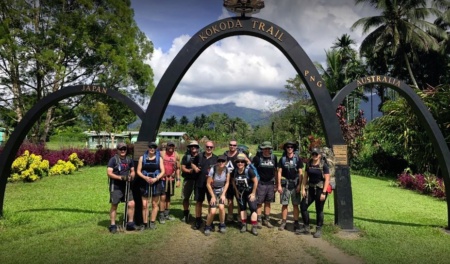
The Kokoda Trail runs 138 kilometres from Owers’ Corner, about 50 kilometres east of Port Moresby, to Kokoda Station in Oro Province. It cuts across the Owen Stanley Range, linking the southern and northern coasts of Papua New Guinea.
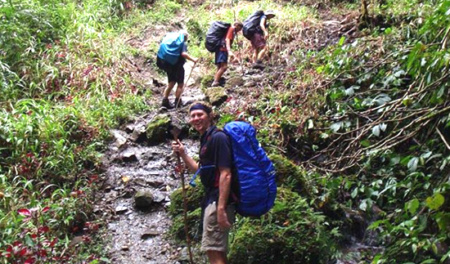
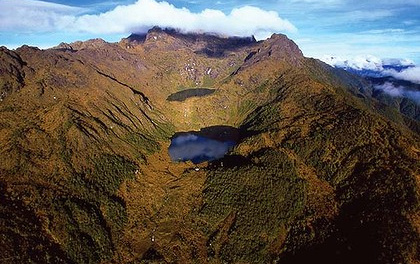
Along the trail, trekkers encounter steep mountain ridges, fast-flowing rivers, dense tropical rainforest, and traditional villages. The terrain is both beautiful and demanding, offering a true immersion into Papua New Guinea’s dramatic landscapes and vibrant local culture.
The Kokoda Trail has a long and layered history that extends well beyond its role in World War II. For centuries, Indigenous communities used the track as a vital trade and communication route, linking villages across the Owen Stanley Range.
In 1942, the trail became the focus of the Kokoda Campaign, a crucial battle between advancing Japanese forces and Allied troops, primarily Australians. Japanese forces landed at Buna and Gona on the northern coast and advanced south with the aim of capturing Port Moresby. Australian soldiers, supported by local Papuan carriers, fought a series of fierce battles along the trail, including Isurava, Brigade Hill, and Ioribaiwa.
Despite being heavily outnumbered and facing extreme terrain, the Australians halted the Japanese advance within 40 kilometres of Port Moresby. The campaign marked the first time Japanese forces were repelled on land during the Pacific War, making Kokoda a turning point in the defence of Australia.
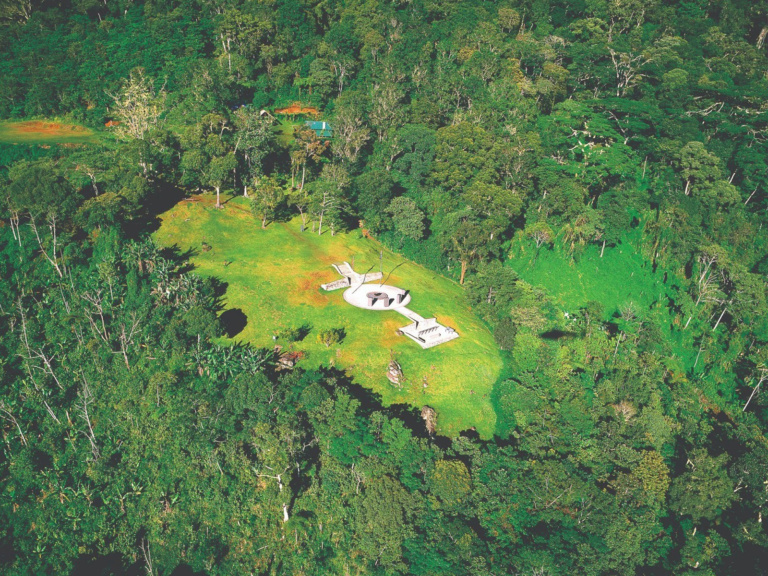
Today, the kokoda stands as a national symbol of courage, endurance, mateship, and sacrifice. Memorials along the route preserve the memory of those who fought and highlight its continuing cultural importance.
Year | Event | Significance |
Pre-1940s | Traditional trade route | Connected local communities |
1942 | Kokoda Campaign | Pivotal WWII battle |
1950s–70s | Trekking begins | First civilian treks recorded |
2000s–present | Heritage recognition | Conservation and cultural tourism focus |
The Kokoda Trail spans 138 kilometres and is usually completed in 6 to 12 days, depending on pace, weather, and group size. Trekkers face steep ascents, slippery descents, multiple river crossings, and the hot, humid conditions of Papua New Guinea’s tropical climate.
The best season to trek is during the dry months from April to November, when the track is more accessible and river levels are lower.
Most people choose to trek with licensed operators, as they provide experienced guides, porters, and logistical support. Independent trekking is possible but less common due to the challenging terrain and the need for Kokoda Track Authority permits.
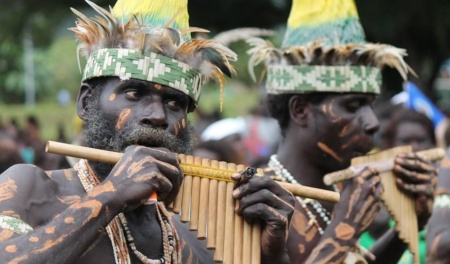
The Kokoda Trail passes through several remote villages, including Isurava, Efogi, and Menari. These communities welcome trekkers and play an important role in maintaining the track while sharing their traditions, stories, and hospitality.
During the Kokoda Campaign of 1942, local Papuans became known as the “Fuzzy Wuzzy Angels” for their extraordinary support of Allied soldiers. They carried supplies, transported the wounded, and guided troops through dense jungle, often under fire. Their compassion and bravery remain a defining part of the Kokoda legacy.
Today, trekking the Kokoda provides opportunities to engage respectfully with local communities. Visitors can stay in village guesthouses, purchase local produce, and learn about the cultural practices that have been passed down through generations. These interactions enrich the trekking experience and support the sustainable future of communities along the track.
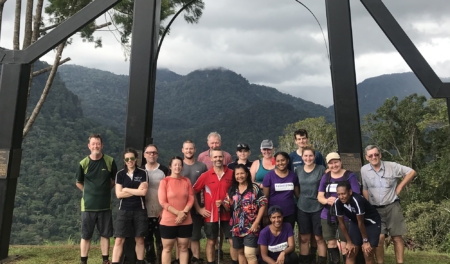
The Kokoda Trail offers a mix of natural beauty, historical landmarks, and cultural encounters. Trekkers follow narrow trails across mountain ridges, through dense rainforest, and along rushing rivers. The scenery is both challenging and rewarding, with views that change dramatically from one day to the next.
Papua New Guinea’s biodiversity is on full display. Bird species such as hornbills and cockatoos can be spotted, alongside vibrant tropical flora including orchids and giant ferns.
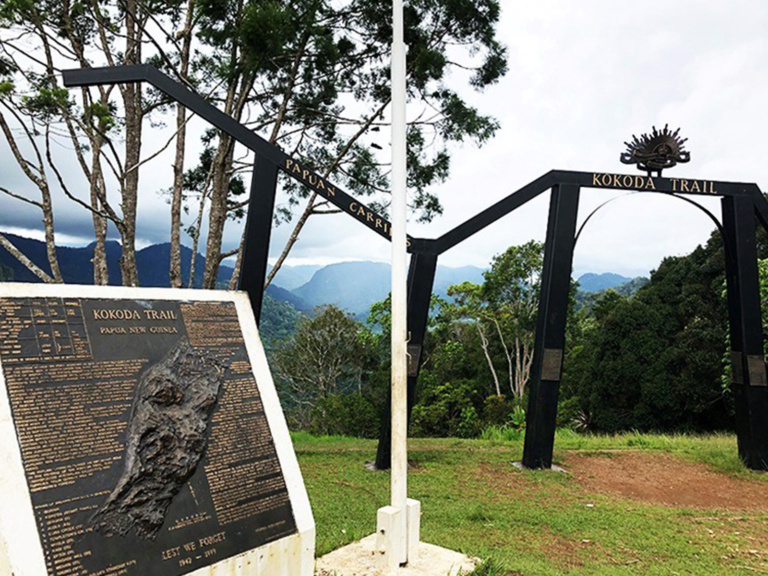
Along the track, memorials mark key battle sites of the 1942 campaign. The Isurava Memorial, Brigade Hill, and Japanese and Australian war cemeteries honour those who fought and sacrificed their lives.
Practical facilities include designated campsites and village guesthouses where trekkers can rest. Many groups also rely on local porters for carrying gear and providing essential support throughout the journey.
Trekking the Kokoda Trail demands strong endurance and physical preparation. The route includes steep climbs, slippery descents, and long daily walking distances, so training beforehand is essential.
All trekkers require a permit from the Kokoda Track Authority. Most choose to go with licensed guides and operators who provide logistical support and ensure safe passage through the trail.
Packing essentials include lightweight clothing, durable boots, a hydration system, insect repellent, and waterproof gear. Staying light while carrying all necessities is key to managing the trek’s demanding conditions.
Health considerations are also important. The tropical climate can be hot and humid, so hydration is critical. Malaria is present in Papua New Guinea, and preventative measures such as medication and insect protection are strongly recommended.
Trekking the kokoda trail offers a rare combination of history, culture, and nature. The route allows travellers to retrace one of World War II’s most significant campaigns, experiencing the same landscapes where battles for Port Moresby were fought.
Beyond its history, the track is a deeply cultural journey, with opportunities to engage with local villages and learn about Papua New Guinea’s traditions. For many, completing the Kokoda is also a personal challenge, an achievement that demands resilience, endurance, and respect for the land and its people.
The Kokoda Trail is 138 kilometres long, stretching from Owers’ Corner near Port Moresby to Kokoda Station in Oro Province.
The track is considered challenging. Trekkers face steep climbs, humid conditions, and daily walks of up to 10 hours, requiring strong fitness and endurance.
The best trekking season is during the dry months from April to November, when river crossings are safer and the trails are less muddy.
ANZAC Day week treks are especially popular, offering a meaningful way to honour the history of the trail.
For those short on time, there are also one-day hikes available from Ower’s Corner in the Central Province, giving trekkers a chance to experience part of Kokoda without committing to the full journey.
Most trekkers choose licensed operators who provide guides, porters, and permits. Independent trekking is possible but less common due to the trails’ remoteness and difficulty.
The trail begins at Owers’ Corner, which is accessible by road from Port Moresby. The northern trailhead at Kokoda Station is reached via small aircraft or road transport from Popondetta.
The Kokoda Trail is more than a trek, it is an experience that connects history, culture, and adventure. Plan your journey with licensed trekking operators, connect with local guides, and book your trip today!


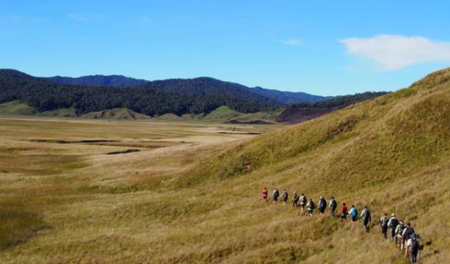
![Kokoda Station, Oro (northern) Province [australian Celebrity Trekkers Gary Lyon And Sam Newman]](https://papuanewguinea.travel/wp-content/uploads/2025/11/Kokoda-Station-Oro-Northern-Province-Australian-celebrity-trekkers-Gary-Lyon-and-Sam-Newman-768x576.jpg)


Thank you for submitting your proposal for the Visital Arrival System (VAS) Upgrade! We will take a look at your submission, and should you be successful, we will contact you.
However, if you do not hear from us, please consider your submission as unsuccessful.
Kind regards,
The Papua New Guinea Tourism Promotion Authority


Thank you for submitting your business form. We will have our team look over the details and then contact you once we have added your details to our website.